
Cranial Nerves Foramina of Exit & Base of Skull Syndromes
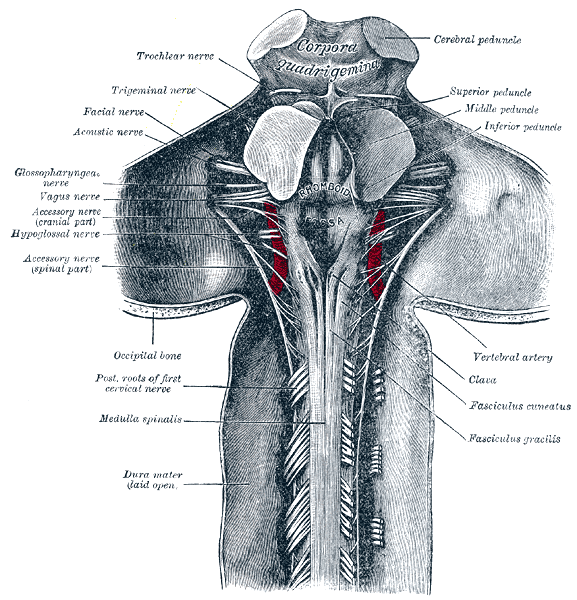
High-Yield Clinical Pearls & Exam Keys
Cribriform plate of Ethmoid: Olfactory nerve (CN I) filaments; fracture causes CSF rhinorrhea and anosmia.
Optic Canal: Optic nerve (CN II) and Ophthalmic Artery.
Superior Orbital Fissure transmits CN III, IV, V1 (lacrimal, frontal, nasociliary), VI, and superior ophthalmic veins.
Foramen Rotundum: Maxillary nerve (CN V2) only ('R-O-T-U-N-D-U-M: Two syllables = V2').
Foramen Ovale: Transmits M-A-L-E (Mandibular nerve V3, Accessory meningeal artery, Lesser petrosal nerve, Emissary vein).
Foramen Spinosum: Middle Meningeal Artery and nervous spinosus; fracture of pterion lacerates MMA causing Epidural Hemorrhage.
Internal Acoustic Meatus: CN VII, CN VIII, and Labyrinthine Artery; cerebellopontine angle (CPA) acoustic neuroma causes sensorineural hearing loss, tinnitus, and facial weakness.
Jugular Foramen: CN IX, X, XI, and Internal Jugular Vein (Vernet's Syndrome).
Ask Dr. Medarro about Anatomy
Instant NMC-grounded answers with standard textbook citations
High-Yield Base of Skull Foramina and Nerve Exits
| Skull Foramen | Cranial Nerves / Structures Transmitted | Clinical Lesion / Syndrome |
|---|---|---|
| Superior Orbital Fissure | CN III, IV, V1, VI, Superior Ophthalmic Vein | Superior Orbital Fissure Syndrome (ophthalmoplegia, forehead sensory loss) |
| Foramen Ovale | CN V3 (Mandibular), Accessory meningeal artery | Loss of mastication, numbness over lower jaw/chin |
| Internal Acoustic Meatus | CN VII (Facial), CN VIII (Vestibulocochlear) | Acoustic Neuroma / Schwannoma, Bell's palsy signs |
| Jugular Foramen | CN IX (Glossopharyngeal), X (Vagus), XI (Accessory) | Vernet's Syndrome (dysphagia, hoarseness, loss of gag reflex, trapezius weakness) |
| Hypoglossal Canal | CN XII (Hypoglossal) | Tongue deviation to ipsilateral side on protrusion |
Interactive Clinical Vignette Practice
Live Rule-Out EngineA patient with a basal skull fracture involving the jugular foramen is evaluated. Which constellation of neurological deficits is most consistent with Vernet's syndrome?
Unlock Complete Viva Traps & Additional Case Vignettes
Access model examiner answers, comprehensive rule-out breakdowns, and 4K spotter explanations.
Want 50+ Clinical Vignettes & 4K 3D Spotters on Anatomy?
Practice Spaced Repetition Decathlon, generate instant 7-day adaptive study plans, and upload your college PDFs into the personal vault.