
Heme Biosynthesis Pathway, Enzymes & Porphyrias Classification
High-Yield Clinical Pearls & Exam Keys
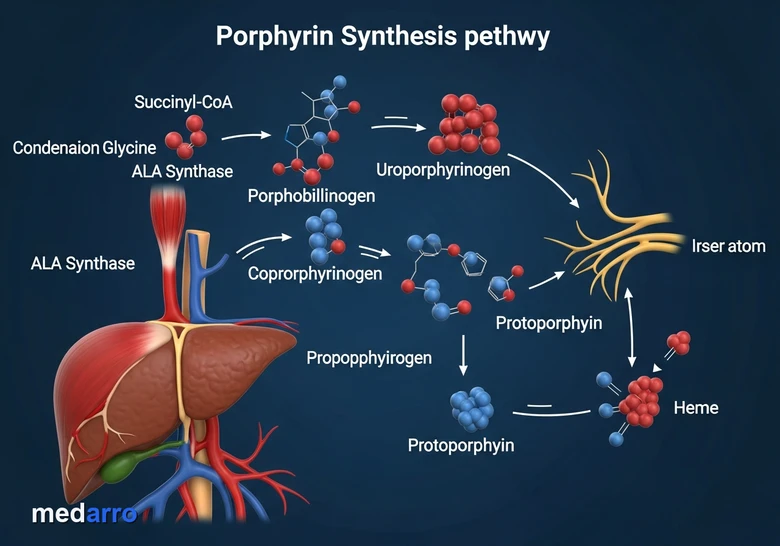
Heme Biosynthesis occurs in the BONE MARROW (85%, for hemoglobin) and LIVER (15%, for Cytochrome P450 enzymes). Occurs partly in the MITOCHONDRIA and partly in the CYTOSOL.
STEP 1 (Mitochondria, Rate-Limiting & Committed): Aminolevulinic Acid Synthase (ALA Synthase): Glycine + Succinyl-CoA -> delta-Aminolevulinic Acid (ALA). Requires PYRIDOXAL PHOSPHATE (Vitamin B6).
- ALAS-1 (Liver): Feedback-inhibited by Heme and Glucose (hemin and glucose infusions treat acute porphyria attacks).
- ALAS-2 (Erythroid): Regulated by Iron; X-linked sideroblastic anemia is caused by ALAS-2 mutation.
STEP 2 (Cytosol): ALA Dehydratase (Porphobilinogen Synthase): Inactivated by LEAD POISONING (lead replaces Zn2+).
ACUTE INTERMITTENT PORPHYRIA (AIP, Autosomal Dominant):
- Deficient Enzyme: Porphobilinogen Deaminase (PBGD / Hydroxymethylbilane Synthase).
- Accumulation of toxic porphyrin precursors: ALA and Porphobilinogen (PBG).
- 5 P's CLINICAL HALLMARK: Painful abdomen, Polyneuropathy (motor peripheral neuropathy), Psychologic disturbances (hallucinations, psychosis), Port-wine colored urine upon standing/light exposure, Precipitated by drugs (CYP inducers: Barbiturates, Rifampin, Phenytoin) / fasting / alcohol.
- NO CUTANEOUS PHOTOSENSITIVITY (precursors before hydroxymethylbilane are non-photoreactive!).
- Treatment: Intravenous Hemin (inhibits ALAS-1) and high-carbohydrate glucose infusions.
PORPHYRIA CUTANEA TARDA (PCT, Autosomal Dominant or Acquired, Most Common Porphyria):
- Deficient Enzyme: Uroporphyrinogen Decarboxylase (UROD).
- Accumulation of Uroporphyrinogen (photoreactive ring molecule).
- HALLMARK: SEVERE CUTANEOUS PHOTOSENSITIVITY with painless blistering, vesicles, and skin fragility on sun-exposed areas (dorsum of hands), hypertrichosis (facial hair), tea-colored urine, iron overload; strongly associated with Hepatitis C virus and alcohol abuse.
Ask Dr. Medarro about Biochemistry
Instant NMC-grounded answers with standard textbook citations
AIP vs Porphyria Cutanea Tarda Differential Matrix
| Clinical Feature | Acute Intermittent Porphyria (AIP) | Porphyria Cutanea Tarda (PCT) |
|---|---|---|
| Deficient Enzyme | Porphobilinogen Deaminase (PBGD) | Uroporphyrinogen Decarboxylase (UROD) |
| Accumulating Substrates | Aminolevulinic acid (ALA) & Porphobilinogen (PBG) | Uroporphyrin (uroporphyrinogen III) |
| Cutaneous Photosensitivity | COMPLETELY ABSENT (zero skin blisters) | PROMINENT (blistering skin lesions on sun exposure) |
| Neuropsychiatric Attacks | SEVERE (abdominal pain, seizures, motor neuropathy) | ABSENT (purely dermatological/cutaneous) |
| Precipitating Triggers | CYP450 inducers (Barbiturates, Anticonvulsants), Fasting | Hepatitis C infection, Alcohol, Iron overload, Estrogen |
| Definitive Therapy | IV Hemin (hemin suppresses ALAS-1) + Glucose | Phlebotomy (iron depletion) + low-dose Hydroxychloroquine |
Interactive Clinical Vignette Practice
Live Rule-Out EngineA 29-year-old female presents with severe colicky abdominal pain, constipation, visual hallucinations, and wrist drop. Her symptoms began 2 days after starting phenobarbital for seizures. Her urine turns a dark reddish port-wine color after sitting on the laboratory bench. Dermatological examination reveals no cutaneous blisters or photosensitivity. Deficiency of which enzyme is responsible?
Unlock Complete Viva Traps & Additional Case Vignettes
Access model examiner answers, comprehensive rule-out breakdowns, and 4K spotter explanations.
Want 50+ Clinical Vignettes & 4K 3D Spotters on Biochemistry?
Practice Spaced Repetition Decathlon, generate instant 7-day adaptive study plans, and upload your college PDFs into the personal vault.