
Ketone Body Synthesis & Utilization in Diabetic Ketoacidosis (DKA)
High-Yield Clinical Pearls & Exam Keys
Ketogenesis occurs EXCLUSIVELY in the MITOCHONDRIAL MATRIX of HEPATOCYTES during prolonged fasting, starvation, or uncontrolled type 1 diabetes mellitus (states of low insulin and high glucagon).
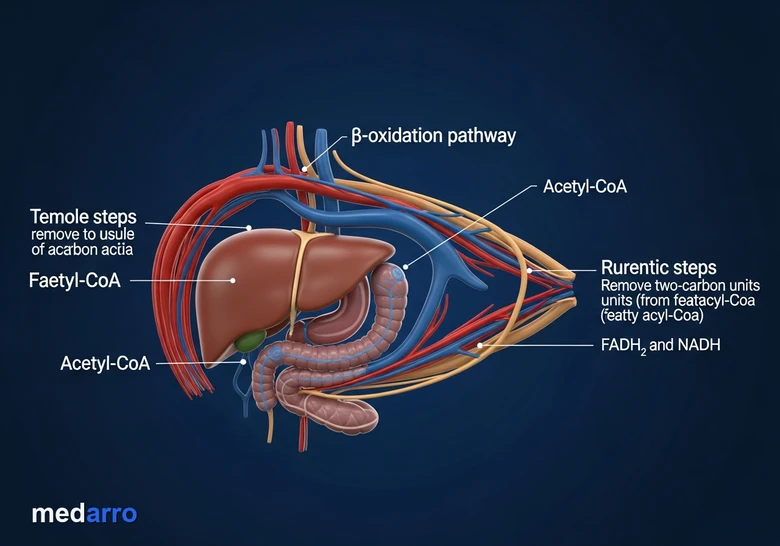
WHY KETONES ARE PRODUCED: Accelerated adipose lipolysis floods the liver with free fatty acids, producing massive Acetyl-CoA via beta-oxidation. Meanwhile, Oxaloacetate (OAA) is completely depleted by active gluconeogenesis. Acetyl-CoA cannot enter the TCA cycle due to lack of OAA and is shunted into ketogenesis.
RATE-LIMITING ENZYME: Mitochondrial HMG-CoA Synthase (3-Hydroxy-3-Methylglutaryl-CoA Synthase). Note: Cytosolic HMG-CoA synthase is involved in cholesterol synthesis.
THREE KETONE BODIES:
1. Acetoacetate: Initial true ketone body produced.
2. Beta-Hydroxybutyrate: Predominant circulating ketone body in Diabetic Ketoacidosis (DKA). Synthesized by Beta-Hydroxybutyrate Dehydrogenase consuming NADH (high NADH/NAD+ ratio in DKA shifts equilibrium heavily toward beta-hydroxybutyrate).
3. Acetone: Non-metabolizable metabolic byproduct produced by spontaneous non-enzymatic decarboxylation of acetoacetate; expired via lungs producing fruity/acetone breath.
WHY THE LIVER CANNOT USE KETONES: Hepatocytes lack the enzyme Thiophorase (Succinyl-CoA:3-Ketoacid CoA Transferase / SCOT), which is required to reactivate acetoacetate to acetoacetyl-CoA using Succinyl-CoA. Thus, the liver makes ketones for peripheral tissues (brain, heart, skeletal muscle) but cannot consume them.
RBCs cannot use ketones because they lack mitochondria. The Brain cannot use fatty acids (cannot cross BBB) but adapts to use ketone bodies during prolonged starvation (>3-5 days).
Ask Dr. Medarro about Biochemistry
Instant NMC-grounded answers with standard textbook citations
Characteristics of the Three Ketone Bodies
| Ketone Compound | Biochemical Structure | Clinical Detection / Hallmark |
|---|---|---|
| Acetoacetate | True 4-carbon beta-keto acid | Detected by traditional Nitroprusside urine dipstick tests |
| Beta-Hydroxybutyrate | Carboxylic acid (technically not a chemical ketone) | PREDOMINANT form in DKA (ratio up to 10:1); NOT detected by urine nitroprusside |
| Acetone | Volatile 3-carbon true ketone | Excreted via expired breath; gives fruity odor in DKA; not metabolized |
Interactive Clinical Vignette Practice
Live Rule-Out EngineA 16-year-old girl with new-onset Type 1 Diabetes Mellitus presents with Kussmaul breathing, dehydration, vomiting, and confusion. Arterial blood gas shows pH 7.15, bicarbonate 9 mEq/L, and an anion gap of 26. Which enzyme is completely absent in hepatic parenchymal cells, preventing the liver from consuming the ketone bodies it generates during this crisis?
Unlock Complete Viva Traps & Additional Case Vignettes
Access model examiner answers, comprehensive rule-out breakdowns, and 4K spotter explanations.
Want 50+ Clinical Vignettes & 4K 3D Spotters on Biochemistry?
Practice Spaced Repetition Decathlon, generate instant 7-day adaptive study plans, and upload your college PDFs into the personal vault.