
Clostridium Species (tetani, botulinum, perfringens, difficile) Toxins & Clinical Features
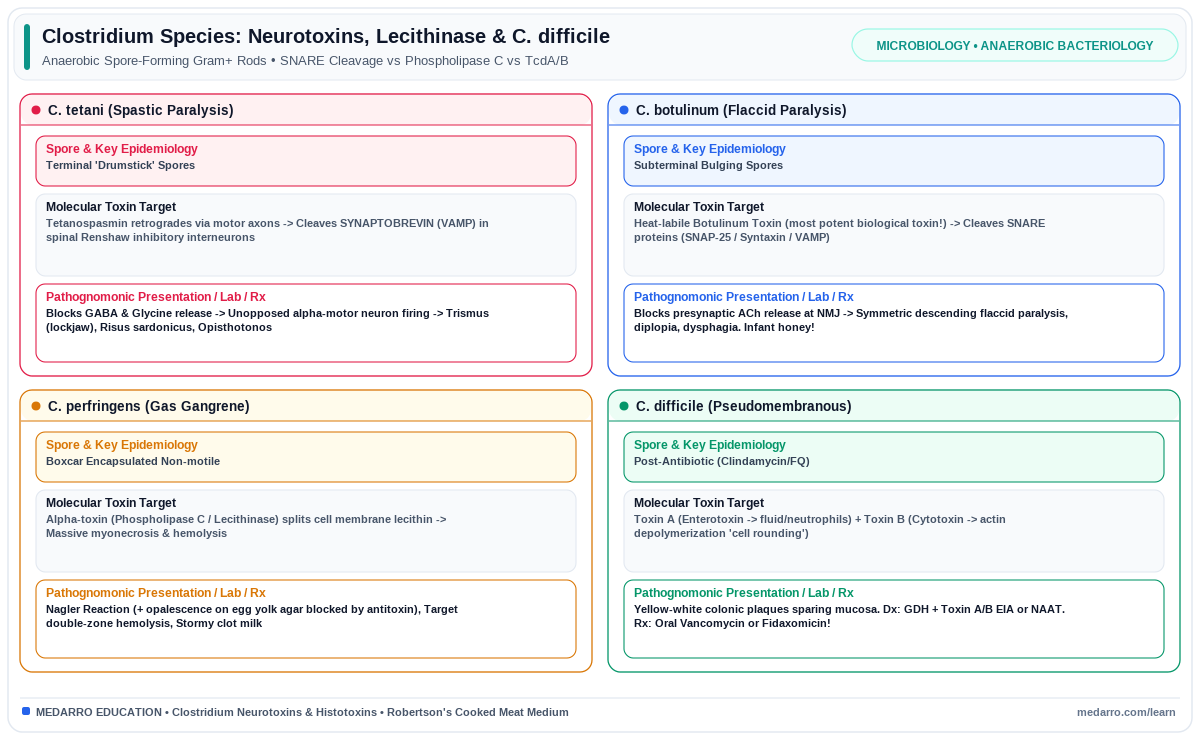
High-Yield Clinical Pearls & Exam Keys
ALL Clostridia are Gram-positive, strictly anaerobic, spore-forming bacilli EXCEPT C. perfringens (usually capsulated and NON-MOTILE in vitro) and rarely aerotolerant C. histolyticum/tertium.
Tetanospasmin (C. tetani, terminal drumstick spores) travels RETROGRADE up motor axons to block inhibitory Renshaw interneurons (cleaves Synaptobrevin SNARE -> stops GABA & Glycine) -> SPASTIC paralysis (trismus, risus sardonicus, opisthotonus).
Botulinum toxin (C. botulinum, subterminal spores) acts at PERIPHERAL neuromuscular junctions (cleaves SNAP-25/Synaptobrevin -> stops Acetylcholine release) -> descending symmetrical FLACCID paralysis with diplopia/dysphagia + infant floppy baby from raw honey!
C. perfringens produces Alpha-toxin (Lecithinase C / Phospholipase C destroying cell membranes -> myonecrosis/gas gangrene); diagnosed by NAGLER REACTION (opalescence on egg-yolk agar neutralized by anti-α-toxin on half the plate) & double-zone target β-hemolysis.
Ask Dr. Medarro about Microbiology
Instant NMC-grounded answers with standard textbook citations
Clostridium Laboratory & Toxin Spotters
C. tetani = Terminal spherical 'Drumstick' spores + Spastic paralysis (blocks GABA/Glycine centrally)
C. botulinum = Preformed heat-labile toxin in home-canned food (alkaline pH) + Flaccid paralysis (blocks peripheral ACh)
C. perfringens = 'Box-car' bacilli without spores in tissue smears + Stormy Fermentation in Litmus Milk + Nagler Test (+)
Four High-Yield Clostridial Pathogens: Toxins, Traps & Rx
| Species & Morphology | Key Toxin & Molecular Target | Hallmark Clinical Syndrome & Primary Rx |
|---|---|---|
| Clostridium tetani (Terminal drumstick spores) | Tetanospasmin (Zn-metalloprotease cleaves Synaptobrevin -> blocks GABA/Glycine) | Lockjaw (trismus), risus sardonicus, opisthotonus | Human TIG + Metronidazole + Diazepam/Mag sulfate |
| Clostridium botulinum (Subterminal bulge) | Botulinum Toxin A-G (cleaves SNARE proteins -> blocks peripheral ACh release) | Descending flaccid paralysis, bilateral CN palsies (NO fever, alert!) | Equine heptavalent antitoxin; Infant = Human BIG |
| Clostridium perfringens (Non-motile capsulated box-car) | Alpha-Toxin (Lecithinase C cleaving cell membrane lecithin) + Theta-toxin | Gas gangrene crepitus, Clostridial food poisoning (heat-resistant spore enterotoxin) | Surgical debridement + Penicillin + Clindamycin (halts toxin!) |
| Clostridioides difficile (Subterminal spores) | Toxin A (Enterotoxin) & Toxin B (Cytotoxin glucosylate Rho-GTPases -> actin collapse) | Pseudomembranous colitis (post-Clindamycin/Fluoroquinolone/PPI) | Oral Vancomycin or Fidaxomicin (FMT if recurrent) |
| Clostridium septicum (Motile anaerobe) | Alpha-toxin (pore-forming hemolysin — distinct from C. perfringens LECITHINASE!) | Nontraumatic spontaneous myonecrosis strongly linked to occult Colonic Adenocarcinoma or Leukemia | Urgent Penicillin + Surgery |
Interactive Clinical Vignette Practice
Live Rule-Out EngineA 7-month-old infant is brought with acute onset constipation over 4 days, poor suck, weak cry, bilateral ptosis, and generalized hypotonia ('floppy baby'). Mother reports giving raw wild honey over the past month. Which pathophysiologic mechanism causes the infant's weakness?
Unlock Complete Viva Traps & Additional Case Vignettes
Access model examiner answers, comprehensive rule-out breakdowns, and 4K spotter explanations.
Want 50+ Clinical Vignettes & 4K 3D Spotters on Microbiology?
Practice Spaced Repetition Decathlon, generate instant 7-day adaptive study plans, and upload your college PDFs into the personal vault.