
Cardiac Cycle Wiggers Diagram & Heart Sounds Genesis
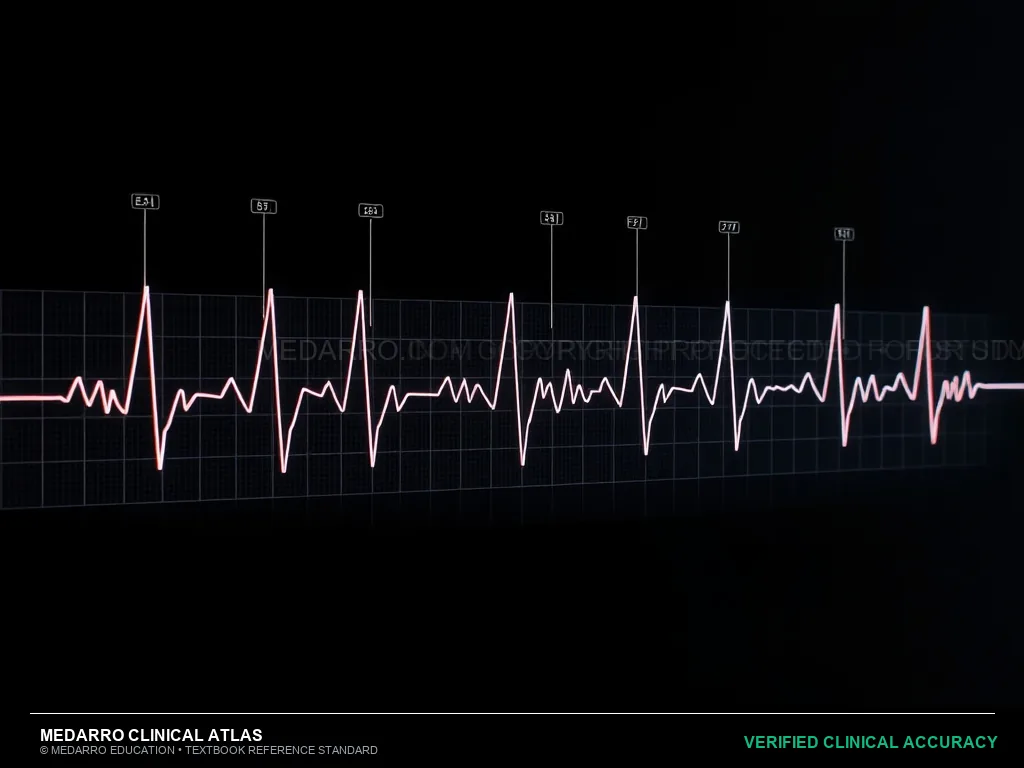
High-Yield Clinical Pearls & Exam Keys
Isovolumetric Contraction: Marks the onset of ventricular systole. Begins with closure of AV valves (Mitral then Tricuspid -> First Heart Sound, S1). ALL 4 VALVES ARE CLOSED. Ventricular pressure rises steeply while ventricular volume remains constant (End-Diastolic Volume ~120 mL).
Rapid Ejection Phase: Aortic and Pulmonic valves open when LV pressure exceeds aortic diastolic pressure (~80 mmHg). LV pressure peaks at ~120 mmHg.
Isovolumetric Relaxation: Marks the onset of ventricular diastole. Begins with closure of semilunar valves (Aortic then Pulmonic -> Second Heart Sound, S2). ALL 4 VALVES ARE CLOSED. Dicrotic notch (incisura) on aortic pressure tracing represents sudden backflow and closure of aortic valve leaflets.
Third Heart Sound (S3): Heard in early diastole during rapid ventricular filling. Normal in children, young athletes, and pregnancy; Pathological in older adults, indicating left ventricular volume overload, dilated cardiomyopathy, or severe mitral regurgitation ('Ken-tuck-y' gallop).
Fourth Heart Sound (S4): Heard in late diastole during atrial systole ('atrial kick'). Always pathological; indicates ventricular non-compliance or stiff wall, such as concentric left ventricular hypertrophy or hypertrophic cardiomyopathy ('Ten-nes-see' gallop).
Ask Dr. Medarro about Physiology
Instant NMC-grounded answers with standard textbook citations
Genesis and Diagnostic Significance of Heart Sounds
| Heart Sound | Timing in Cardiac Cycle | Mechanism of Genesis | Clinical Correlation |
|---|---|---|---|
| S1 | Onset of Ventricular Systole (Isovolumetric contraction) | Closure of Mitral (M1) and Tricuspid (T1) valves | |
| S2 | Onset of Ventricular Diastole (Isovolumetric relaxation) | Closure of Aortic (A2) and Pulmonic (P2) valves | |
| S3 | Early Diastole (Rapid filling phase) | Tension of chordae tendineae during rapid deceleration of inflow | |
| S4 | Late Diastole (Atrial contraction) | Vibration of stiff, non-compliant ventricular wall during atrial kick |
Interactive Clinical Vignette Practice
Live Rule-Out EngineDuring which phase of the cardiac cycle is myocardial oxygen consumption at its highest rate despite zero change in intraventricular blood volume?
Unlock Complete Viva Traps & Additional Case Vignettes
Access model examiner answers, comprehensive rule-out breakdowns, and 4K spotter explanations.
Want 50+ Clinical Vignettes & 4K 3D Spotters on Physiology?
Practice Spaced Repetition Decathlon, generate instant 7-day adaptive study plans, and upload your college PDFs into the personal vault.