
Intestinal Obstruction: Small vs Large Bowel, Strangulation & Management
High-Yield Clinical Pearls & Exam Keys
Postoperative peritoneal adhesions are the cause of 65-75% of all small bowel obstructions in developed nations.
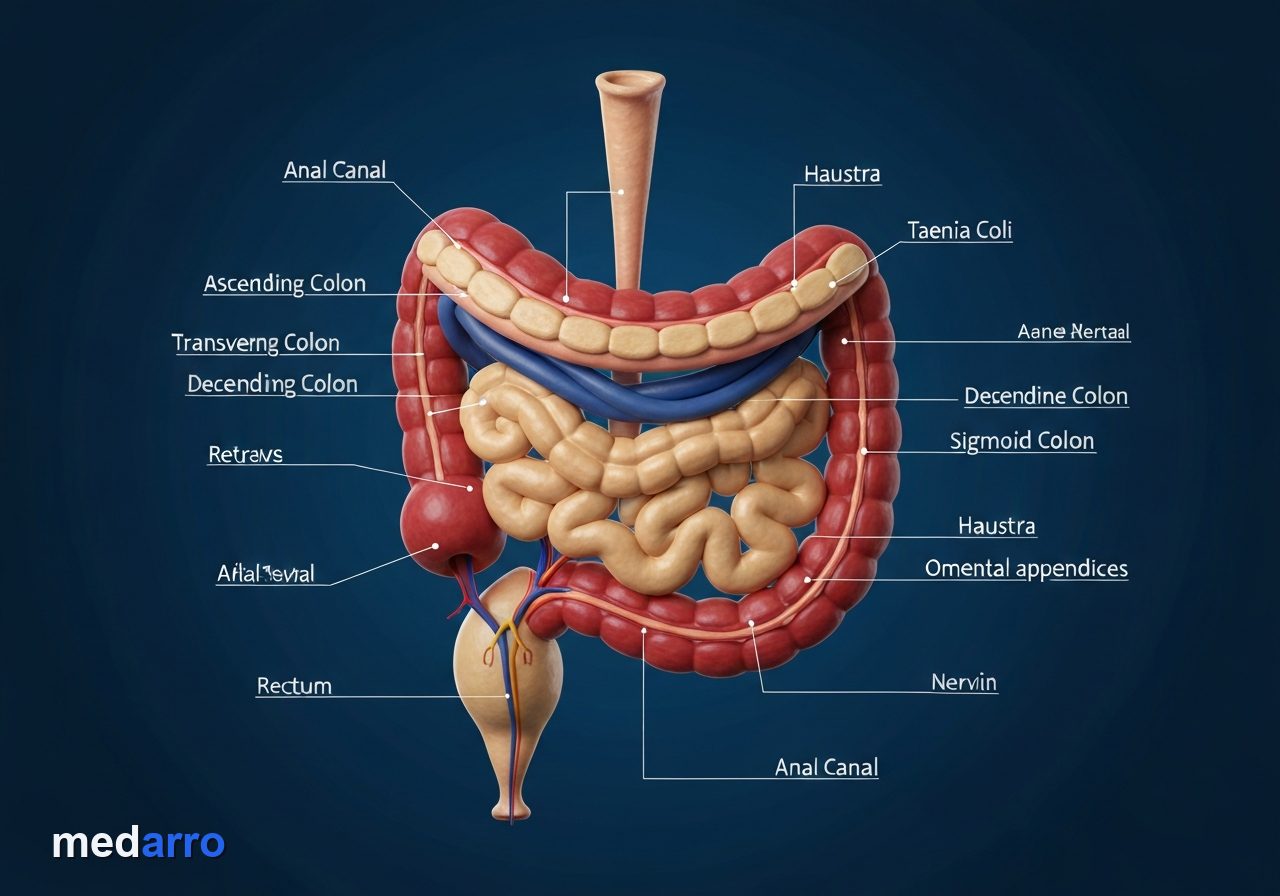
Valvulae conniventes (plicae circulares) in the jejunum cross the ENTIRE transverse diameter of the gas-filled lumen, distinguishing small bowel from colonic haustra on abdominal X-rays.
Strangulation (compromise of mesenteric blood supply) is suggested by continuous non-colicky pain, localized peritonism, fever, leukocytosis, and unexplained tachycardia.
Ask Dr. Medarro about General Surgery
Instant NMC-grounded answers with standard textbook citations
Cardinal Symptoms of Mechanical Intestinal Obstruction
1. Colicky abdominal pain (crescendo-decrescendo; coincides with peristaltic rushes)
2. Vomiting (early & bilious in high small bowel; late & feculent in low small/colonic)
3. Absolute constipation (obstipation: failure to pass both flatus and feces) & abdominal distension
Small Bowel Obstruction (SBO) vs Large Bowel Obstruction (LBO)
| Clinical / Radiological Parameter | Small Bowel Obstruction | Large Bowel Obstruction |
|---|---|---|
| Most Common Etiology | Postoperative Peritoneal Adhesions (60-70%) followed by Incarcerated Hernias (15-20%) | Colorectal Carcinoma (60%) followed by Diverticulitis & Sigmoid Volvulus |
| Radiological Appearance | Centrally located loops; Valvulae conniventes (plicae circulares crossing complete bowel width); 'string of pearls' sign | Peripherally located loops; Haustra (lines do NOT cross complete width); spacing > 5 cm |
| Abdominal Distension | Mild to moderate (predominantly central) | Massive and early (predominantly peripheral frames with tympanitic fullness) |
Interactive Clinical Vignette Practice
Live Rule-Out EngineA 58-year-old woman who underwent a total abdominal hysterectomy 4 years ago presents with colicky abdominal pain, recurrent bilious vomiting, and failure to pass flatus for 2 days. On examination, the abdomen is moderately distended with high-pitched tinkling bowel sounds. Erect abdominal radiography reveals multiple centrally located dilated loops of bowel with mucosal folds crossing the entire transverse diameter of the lumen and multiple air-fluid levels in a 'step-ladder' pattern. What is the most likely cause?
Unlock Complete Viva Traps & Additional Case Vignettes
Access model examiner answers, comprehensive rule-out breakdowns, and 4K spotter explanations.
Want 50+ Clinical Vignettes & 4K 3D Spotters on General Surgery?
Practice Spaced Repetition Decathlon, generate instant 7-day adaptive study plans, and upload your college PDFs into the personal vault.