
Loop Diuretics: NKCC2 Inhibition, Clinical Uses & Adverse Effects
High-Yield Clinical Pearls & Exam Keys
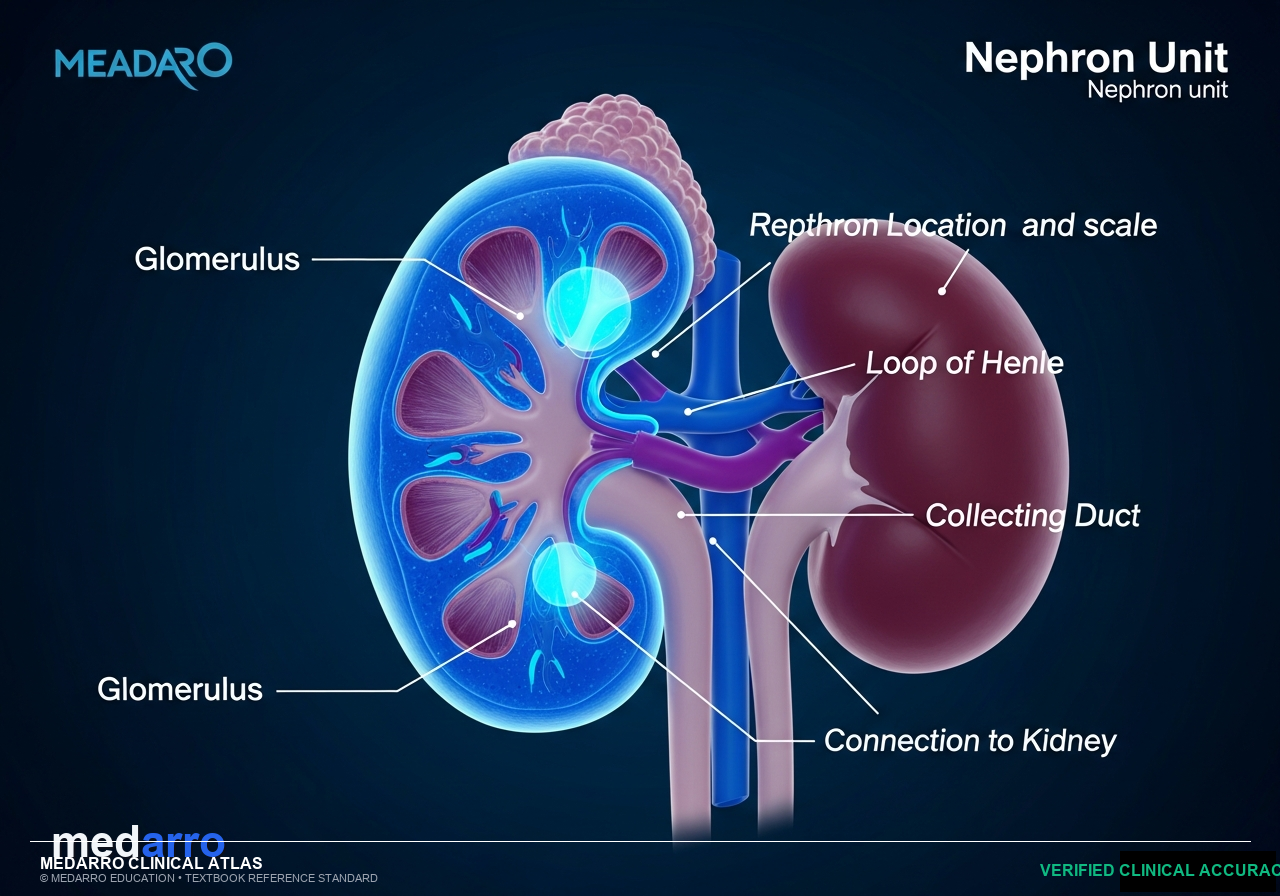
Furosemide inhibits the Na+/K+/2Cl- (NKCC2) cotransporter in the thick ascending limb of the loop of Henle by competing for the chloride-binding site.
By blocking K+ reabsorption and subsequent back-diffusion via ROMK channels, loop diuretics abolish the positive lumen-potential (+8 mV), leading to urinary wasting of Ca2+ and Mg2+.
Loop diuretics stimulate renal prostaglandin synthesis (PGE2), causing acute renal and pulmonary venodilation that relieves pulmonary edema before diuresis begins.
Ask Dr. Medarro about Pharmacology
Instant NMC-grounded answers with standard textbook citations
Mnemonic: Loop Diuretics Adverse Effects (OH DANG!)
Ototoxicity (tinnitus, reversible hearing loss worsened by aminoglycosides)
Hypokalemic metabolic alkalosis & Hypocalcemia / Hypomagnesemia
Dehydration & Gout (Hyperuricemia via competitive organic acid secretion)
Loop Diuretics vs Thiazide Diuretics Comparison
| Pharmacological Parameter | Loop Diuretics (Furosemide / Torsemide) | Thiazide Diuretics (Hydrochlorothiazide / Chlorthalidone) |
|---|---|---|
| Site & Target Transporter | Thick Ascending Limb (TAL) of Henle; NKCC2 symporter | Early Distal Convoluted Tubule (DCT); NCCT (Na+/Cl-) symporter |
| Efficacy / Ceiling | High-ceiling diuretic (excretes up to 20-25% of filtered Na+) | Low-ceiling diuretic (excretes maximum 5-8% of filtered Na+) |
| Effect on Urinary Calcium | Hypercalciuric (wastes calcium; useful in acute hypercalcemia) | Hypocalciuric (retains calcium; useful in recurrent calcium oxalate stones) |
| Efficacy in Renal Failure | Remains effective at GFR < 30 mL/min (drug of choice in CKD edema) | Ineffective at GFR < 30 mL/min (except Metolazone & Indapamide) |
Interactive Clinical Vignette Practice
Live Rule-Out EngineA 64-year-old man with severe congestive heart failure (NYHA Class IV) presents with acute pulmonary edema. He is given an intravenous bolus of Furosemide. Within 5 to 10 minutes, before significant urine volume is produced, the patient reports substantial improvement in his dyspnea. What pharmacological mechanism explains this rapid initial therapeutic benefit?
Unlock Complete Viva Traps & Additional Case Vignettes
Access model examiner answers, comprehensive rule-out breakdowns, and 4K spotter explanations.
Want 50+ Clinical Vignettes & 4K 3D Spotters on Pharmacology?
Practice Spaced Repetition Decathlon, generate instant 7-day adaptive study plans, and upload your college PDFs into the personal vault.