
Neuromuscular Junction Transmission & Myasthenia Gravis vs LEMS
High-Yield Clinical Pearls & Exam Keys
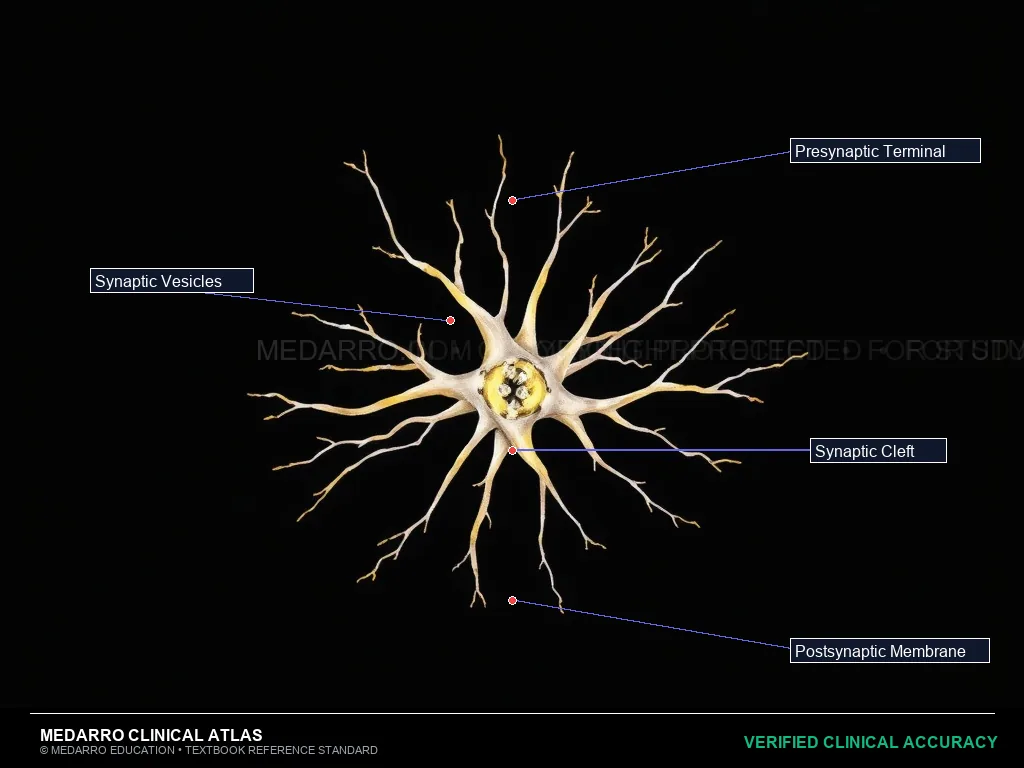
Normal NMJ Transmission: Nerve action potential depolarizes presynaptic bouton -> opens voltage-gated P/Q-type Ca2+ channels -> Ca2+ influx triggers SNARE-mediated exocytosis of Acetylcholine (ACh) vesicles -> ACh binds nicotinic ACh receptors (nAChR) on motor end-plate -> End-Plate Potential (EPP) generated -> cleaved by Acetylcholinesterase.
Myasthenia Gravis (MG): Autoantibodies against POST-SYNAPTIC nicotinic ACh receptors (AChR) or MuSK. Leads to receptor internalization and complement-mediated destruction of junctional folds.
Clinical Presentation of MG: Fatigable muscle weakness that WORSENS WITH REPETITIVE USE and toward the end of the day. Extraocular muscles earliest affected (asymmetric ptosis, diplopia). Preserved deep tendon reflexes. Associated with Thymoma (10-15%) or Thymic Hyperplasia (65%).
Lambert-Eaton Myasthenic Syndrome (LEMS): Autoantibodies against PRE-SYNAPTIC voltage-gated P/Q-type Ca2+ channels (VGCC). Impairs calcium-dependent ACh vesicle release.
Clinical Presentation of LEMS: Proximal limb weakness that IMPROVES WITH REPETITIVE USE (post-exercise facilitation due to Ca2+ buildup in presynaptic terminal). Autonomic dysfunction present (dry mouth, erectile dysfunction, constipation). Absent/diminished deep tendon reflexes. Associated with Small Cell Lung Cancer (SCLC) in >50% (paraneoplastic).
Ask Dr. Medarro about Physiology
Instant NMC-grounded answers with standard textbook citations
Myasthenia Gravis vs Lambert-Eaton Myasthenic Syndrome
| Diagnostic Feature | Myasthenia Gravis (MG) | Lambert-Eaton Syndrome (LEMS) |
|---|---|---|
| Target Antigen | Post-synaptic Nicotinic ACh Receptors (AChR) | Presynaptic P/Q-type Voltage-Gated Ca2+ Channels (VGCC) |
| Effect of Repetitive Muscle Use | Weakness WORSENS with repetitive activity / fatigue | Weakness IMPROVES with repetitive activity (facilitation) |
| Ocular Muscle Involvement | Very common early (ptosis, diplopia in >80%) | Rare or mild; proximal lower limbs affected first |
| Autonomic Symptoms | Absent | Prominent (dry mouth, constipation, erectile dysfunction) |
| Deep Tendon Reflexes | Normal / Preserved | Depressed or Absent (increases after brief exercise) |
| Malignancy Association | Thymoma (10-15%) | Small Cell Lung Carcinoma (>50%) |
| Repetitive Nerve Stimulation (RNS) | Decremental response at low frequency (3 Hz) | Incremental response (>100% facilitation) at high frequency (20-50 Hz) |
Interactive Clinical Vignette Practice
Live Rule-Out EngineA 62-year-old heavy smoker presents with progressive difficulty standing up from a chair and climbing stairs. He also reports severe dry mouth. On physical examination, proximal lower limb strength is 3/5 initially, but improves to 5/5 after 15 seconds of maximum voluntary isometric contraction. Deep tendon reflexes are absent at rest but reappear post-exercise. What is the underlying molecular pathology?
Unlock Complete Viva Traps & Additional Case Vignettes
Access model examiner answers, comprehensive rule-out breakdowns, and 4K spotter explanations.
Want 50+ Clinical Vignettes & 4K 3D Spotters on Physiology?
Practice Spaced Repetition Decathlon, generate instant 7-day adaptive study plans, and upload your college PDFs into the personal vault.