
Surgical Shock Classification: Hemodynamic Profiles, ATLS Class I-IV & Sepsis-3
High-Yield Clinical Pearls & Exam Keys
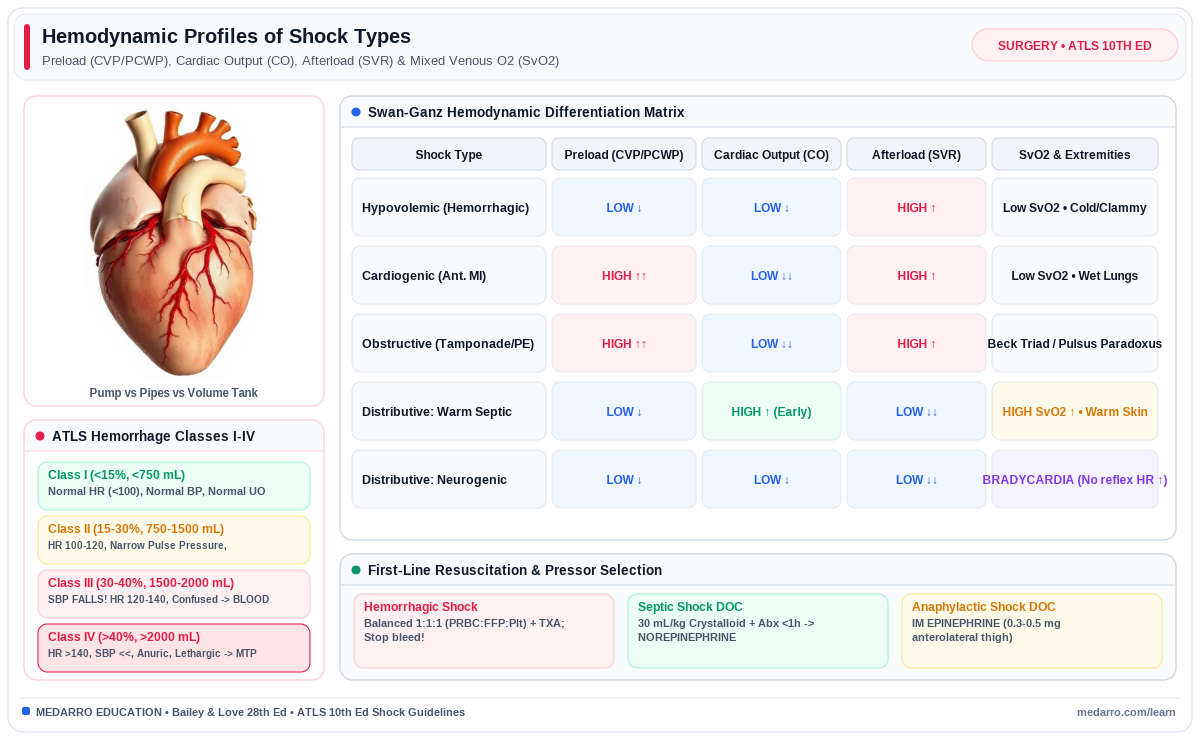
HYPOVOLEMIC & CARDIOGENIC SHOCK show LOW Cardiac Output (CO) + HIGH Systemic Vascular Resistance (SVR -> cold clammy skin!), separated by PCWP/CVP (LOW in Hypovolemic vs HIGH in Cardiogenic & Obstructive Tamponade!).
NEUROGENIC SHOCK (High spinal injury >=T6): Loss of sympathetic vascular tone AND unopposed vagal T1-T4 cardioaccelerator block -> ONLY shock presenting with HYPOTENSION + WARM SKIN + PARADOXICAL BRADYCARDIA (vs Spinal Shock = temporary loss of spinal cord reflexes below lesion!).
SEPTIC SHOCK (Sepsis-3): Persistent hypotension requiring vasopressors to keep MAP >=65 mmHg AND serum lactate >2 mmol/L despite adequate IV crystalloid (30 mL/kg) -> 1st-line Vasopressor = NOREPINEPHRINE (add Vasopressin second if refractory!).
ATLS CLASS III HEMORRHAGE (30-40% blood loss = 1500-2000 mL): SBP FINALLY DROPS! Remember hypotension is a LATE sign of hemorrhagic shock (narrowing pulse pressure occurs earlier in Class II!).
OBSTRUCTIVE SHOCK (Beck's triad tamponade, Tension pneumothorax, Massive PE): High CVP + Severe hypotension + Pulsus paradoxus (>10 mmHg SBP drop on inspiration) -> Immediate needle/finger decompression or pericardiocentesis before fluids!
Ask Dr. Medarro about General Surgery
Instant NMC-grounded answers with standard textbook citations
Hemodynamic Differential & ATLS Shock Traps
ONLY Warm Distributive Shocks (High CO early + LOW SVR): Early Sepsis, Anaphylaxis (Epinephrine IM anterolateral thigh FIRST!), Adrenal Crisis.
Cardiac Tamponade Beck's Triad: Hypotension + Distended Neck Veins (High JVP/CVP) + Muffled Heart Sounds -> Equalized diastolic pressures across all 4 chambers!
Permissive Hypotension in Penetrating Trauma (Target SBP 80-90 mmHg until surgical bleeding controlled; EXCEPT Traumatic Brain Injury -> keep SBP >=100-110 / MAP >=80 to protect CPP!).
Swan-Ganz Catheter Hemodynamic Fingerprint Across Shock Types
| Shock Etiology | Cardiac Output (CO) & HR | SVR & Skin / PCWP (Preload) |
|---|---|---|
| Hypovolemic (ATLS Hemorrhage) | LOW CO + Tachycardia (compensatory) | HIGH SVR (Cold clammy!) | VERY LOW PCWP/CVP |
| Cardiogenic (Anterior MI / MR) | LOW CO + Tachycardia | HIGH SVR (Cold!) | HIGH PCWP (>18 mmHg, Pulmonary Edema) |
| Septic (Distributive Warm -> Cold) | HIGH CO early (+Tachycardia!) | LOW SVR (Warm flushed!) | Normal/Low PCWP; High Mixed Venous O2! |
| Neurogenic (>=T6 Cord Injury) | LOW CO + BRADYCARDIA (Unique!) | LOW SVR (Warm flushed!) | LOW PCWP (Rx Fluids -> Norepi + Atropine) |
| Obstructive (Tamponade / Tension PTX) | LOW CO + Severe Tachycardia | HIGH SVR | HIGH CVP/JVP; Pulsus Paradoxus; Urgent decompression! |
Interactive Clinical Vignette Practice
Live Rule-Out EngineA 29-year-old motorcyclist is brought after a high-speed collision with complete loss of motor and sensory function below the nipple line (T4). Vital signs show BP 78/42 mmHg, HR 48/min, RR 16/min, warm dry lower extremities, and FAST exam is negative for free intra-abdominal fluid. Pelvic X-ray and CXR are normal. Which hemodynamic profile explains his vitals?
Unlock Complete Viva Traps & Additional Case Vignettes
Access model examiner answers, comprehensive rule-out breakdowns, and 4K spotter explanations.
Want 50+ Clinical Vignettes & 4K 3D Spotters on General Surgery?
Practice Spaced Repetition Decathlon, generate instant 7-day adaptive study plans, and upload your college PDFs into the personal vault.