
Antepartum Haemorrhage (Placenta Previa vs Abruptio Placentae) Clinical Differences
High-Yield Clinical Pearls & Exam Keys
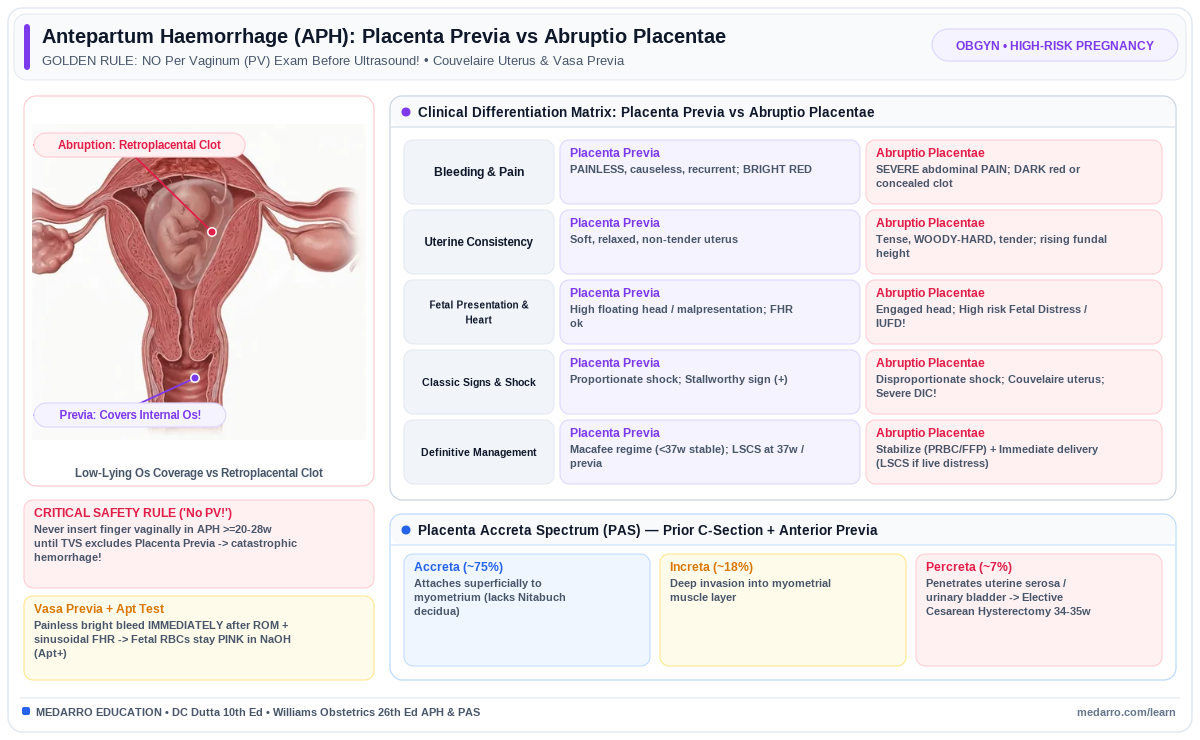
GOLDEN RULE OF APH: NEVER perform a digital per vaginum (PV) examination in any patient presenting with third-trimester bleeding until placenta previa has been definitively excluded on ultrasound ('No PV before USG').
Placenta previa presents with painless, causeless, recurrent bright-red vaginal bleeding; blood loss visible externally strictly matches maternal shock severity.
Abruptio placentae presents with painful, dark-red bleeding (or concealed retroplacental clot) accompanied by a tense, woody-hard, tender uterus and fetal distress/demise out of proportion to revealed bleeding.
Couvelaire uterus (uteroplacental apoplexy) occurs in severe concealed abruption as blood extravasates between myometrial fibers causing bluish-purple mottling; it is NOT an indication for hysterectomy by itself unless intractable atony persists.
Vasa previa presents as sudden painless vaginal bleeding immediately upon amniotomy/ROM accompanied by acute sinusoidal FHR pattern or fetal bradycardia — Apt test confirms fetal blood.
Ask Dr. Medarro about Obstetrics & Gynaecology
Instant NMC-grounded answers with standard textbook citations
APH Diagnostic Differentiation Anchors
Placenta Previa: Painless + Bright Red Blood + Soft Non-Tender Uterus + Malpresentation / High Head
Abruptio Placentae: Severe Abdominal Pain + Dark Blood / Concealed + Woody-Hard Uterus + Fetal Distress / DIC
Vasa Previa: Bleeding Immediately After ROM + Rapid Fetal Heart Deceleration + Fetal RBCs on Apt Test
Placenta Previa vs Abruptio Placentae vs Vasa Previa
| Clinical / USG Feature | Placenta Previa | Abruptio Placentae |
|---|---|---|
| Pain & Bleeding Nature | Painless, causeless, recurrent; bright red, proportionate to shock | Severe constant abdominal pain; dark red or concealed clot; shock disproportionate |
| Uterine Tone & FHR | Soft, relaxed, non-tender; fetal heart usually normal unless massive hemorrhage | Tense, woody-hard, tender uterus; high risk of fetal distress or IUFD |
| Risk Factors | Prior LSCS / myomectomy, multiparity, twin gestation, smoking, D&C | Pre-eclampsia / chronic HTN (most common), trauma, sudden decompression, cocaine, smoking |
| Classic Clinical Signs | High floating presenting part, malpresentation; Stallworthy sign (FHR slows on pushing head down in posterior previa) | Rising fundal height in concealed type; Couvelaire uterus; severe DIC (consumptive coagulopathy) |
| Primary Management | Macafee & Johnson expectant regime if preterm & stable (<37w); C-section if covering os or persistent bleeding | Urgent stabilization (blood/FFP), amniotomy + oxytocin if stable & FHR ok, or emergency C-section if live fetus distressed |
Interactive Clinical Vignette Practice
Live Rule-Out EngineA 32-year-old G3P2 at 34 weeks gestation with severe pre-eclampsia presents with sudden severe abdominal pain, scanty dark-red vaginal bleeding, BP 80/50 mmHg, a tense woody-hard tender uterus, and absent fetal heart sounds. What is the most critical immediate complication to screen for alongside volume resuscitation?
Unlock Complete Viva Traps & Additional Case Vignettes
Access model examiner answers, comprehensive rule-out breakdowns, and 4K spotter explanations.
Want 50+ Clinical Vignettes & 4K 3D Spotters on Obstetrics & Gynaecology?
Practice Spaced Repetition Decathlon, generate instant 7-day adaptive study plans, and upload your college PDFs into the personal vault.